
What makes a fascist?
desire, destiny, and normality in Alberto Moravia's "The Conformist"

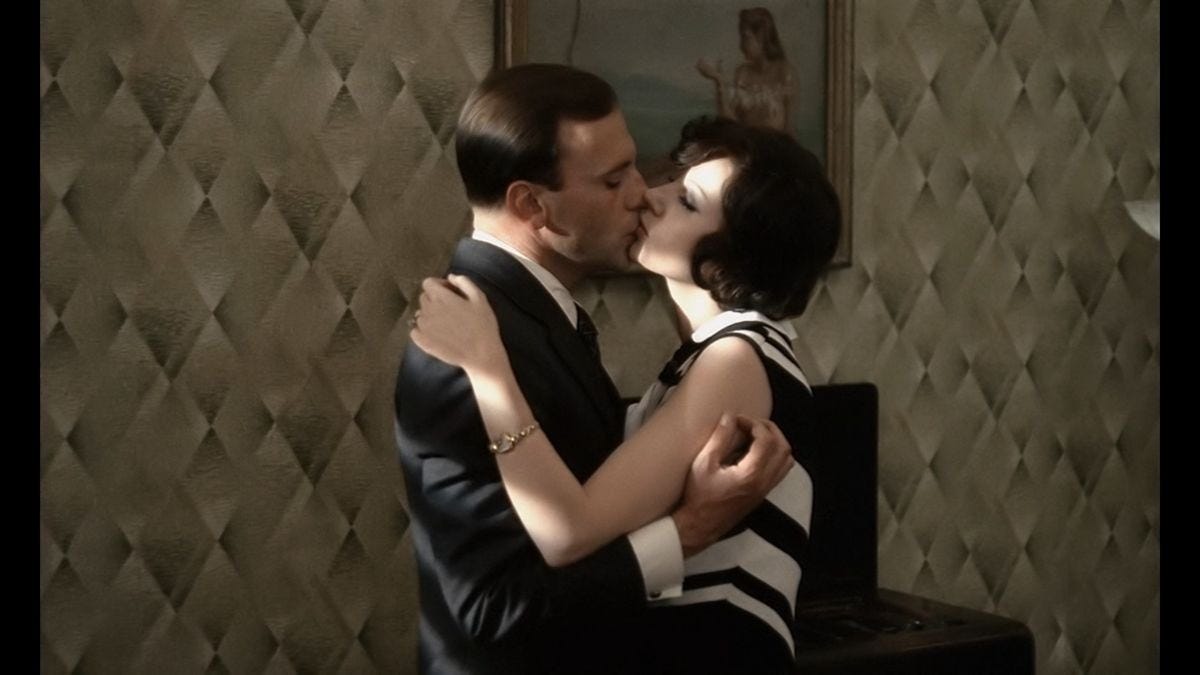
Freud didn’t think it was possible to be normal. For him, this unattainable state was better understood as a tool in the analyst’s “formidable suite of psychic, epistemic and ethical virtues,” as Amia Srinivasan wrote for the London Review of Books late last year. Srinivasan goes on:
“Perfect normality was an ‘ideal fiction’ that even the analyst could only approximate. Nonetheless, the analyst required ‘a considerable degree of mental normality and correctness’, and indeed ‘some kind of superiority, so that ... he can act as a model for his patient’.”
To be normal, then, is not a goal, but an aspiration, a means to a much-coveted end: freedom from hysterical and neurotic symptoms, without which there is no hope of happiness—itself hardly more assured than this mythical normality. As Freud writes in Studies in Hysteria, “much will be gained if we succeed in transforming your hysterical misery into common unhappiness1. With a mental life that has been restored to health, you will be better armed against that unhappiness.”
The psychoanalytic distinction between “normal” and “happy,” then, is this: one is a useful fantasy and the other a tantalizing possibility that may be reached—and even then, only fleetingly—when we shrewdly suspended our disbelief in said fantasy (with the help of our analyst, one guesses). Misunderstand me at your own risk: if you confuse normality with happiness, you may spend your life pursuing the former only to foreclose forever on the possibility of latter.
Only then do you learn that there are far worse things to be than unhappy.
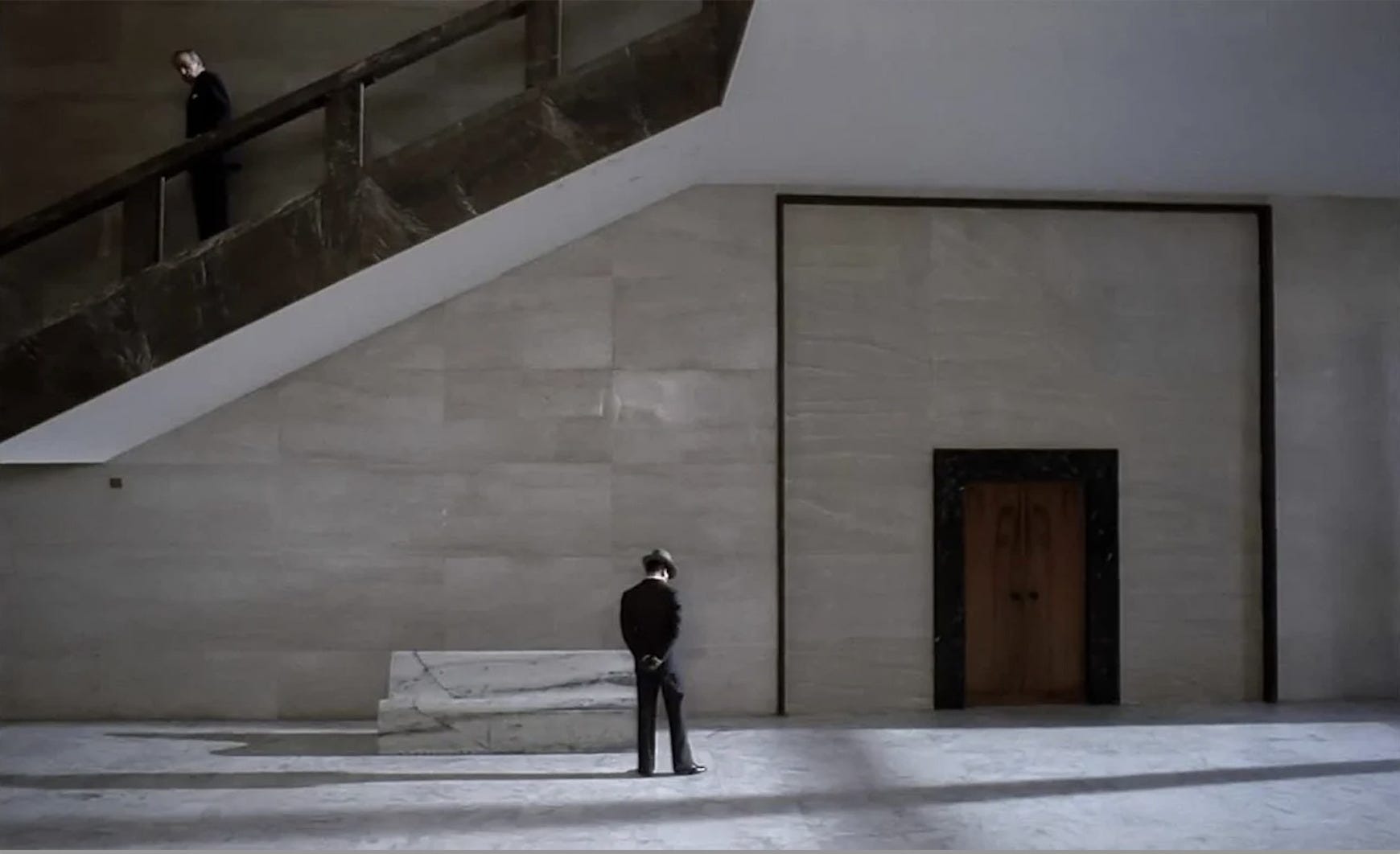
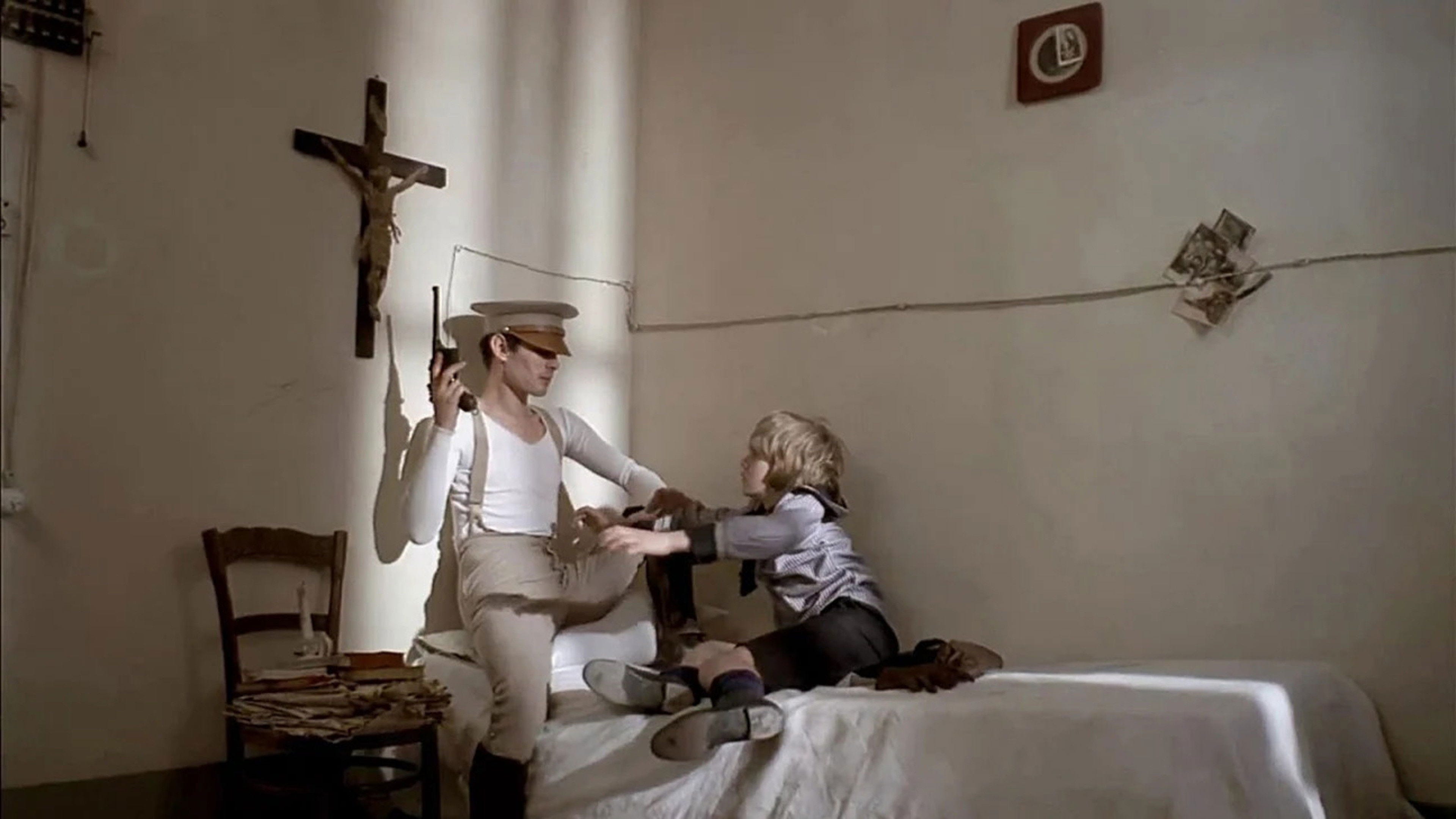
Alberto Moravia’s The Conformist begins with a schoolboy’s first sadistic impulses. It’s summertime, not long before Mussolini’s March on Rome, and little Marcello Clerici likes killing lizards. Confused by what he believes is an abnormal desire, he feels guilt and frustration. After a neighbor boy won’t cosign his violence and his abusive parents fail to express an interest in guiding his moral development, he kills the family cat and gets away with that, too. Now convinced of his lack of “normality,” Marcello longs “to be like everyone else, from the moment that being different meant being guilty.”
When he returns to school, the pert and pretty Marcello swiftly becomes the resident effeminate with a bad home life. His is “almost the face of a young girl,” as is “an unusual tendency to blush easily, an irresistible inclination to express his tenderness of spirit by caresses.” His schoolmates bully the sissy relentlessly, provoking in Marcello “a mixture of anger and flattered satisfaction, as if a deep part of him were not altogether unhappy about it.”
One day after school, his bullies are forcing him into a skirt when a strange chauffeur named Lino intervenes. Though Marcello senses the chauffeur’s ill intent, he promises him a pistol, which the boy believes will help him regain his dignity among his classmates.
Tortured by his own abnormal desires, Lino—who confesses that he is a defrocked priest—tells the boy to leave him while simultaneously begging for his company. The “not unpleasant humiliation” caused by the chauffeur’s conflicted yearning reminds Marcello of his bullies; of his young mother’s flirtations with his volatile father. But the pistol’s allure outweighs his ambivalence, and Marcello allows himself to be driven to the chauffeur’s home in pursuit of his trophy. There, when Lino tries to rape him, the terrified boy manages to shoot him and escape through a window.
It’s 1937 and Marcello is a handsome young civil servant in fascist Rome. He’s never told anyone about killing Lino, a crime he now feels (or tells himself he feels) indifferent to: “an impotent man lying alongside the naked and desirable body of a woman was not more inert than his mind confronted with that remote event of his life.” Engaged to Giulia, a beautiful young woman of surpassing (even, he suspects, congenital) normality, he is no longer the fearful and feminine sissy of his school days. “[A]ltogether masculine” at 30 years old, he’s preparing for a secret mission to kill his former professor, Quadri, an anti-fascist agitator exiled to Paris. This bold act of complicity will solidify his new identity as “a brother, a citizen, a comrade,” rather than as “a loner, abnormal, crazy”—or so Marcello hopes.
The government officials praise Marcello’s bold suggestion to use his honeymoon with Giulia as a pretext to visit Paris, where he will finger Quadri, Judas-style, for Orlando, the assassin assigned to Marcello as fixer/chaperone. This is less an idea, he tells himself, than it is a symbol of a natural destiny that “surely proved that his posture of social and political normality was authentic…He was what he was and everything he did was right if it conformed to what he was.”
Giulia talks Marcello into going to confession for the first time since childhood; despite the young moderns’ religious apathy, it’s still the normal thing to do. Feeling rebellious (a sensation he didn’t experience in the government’s brutalist offices), he confesses his childhood crime to the priest, which doesn’t draw the response he was expecting: “So, Marcello couldn’t help thinking, the murder wasn’t more important than the sin of sodomy.” Still, as is normal, he is forgiven his trespasses, leaving the church with the sense that he is “saying farewell forever to the ancient and outlived image of a world he desired but now knew was no longer accessible.”
A few more sour chores for Marcello before this chapter ends: he visits his mother, now reduced to hoarding lapdogs and fucking her chauffeur in the dilapidated family home2, and then his syphilitic father in the insane asylum where he’s been confined since around the time of Lino’s death. Marcello hates them both and neither attend his wedding.
En route Paris, Giulia makes her own confession. She reveals her history of abandonment and sexual abuse, expecting that her new husband will reject her for it. Marcello is not so insecure, at least on this front; rather, he observes with fascination that, despite her suffering’s parallels with his, her normality (if not her virginity) remains intact. “Normality, as he suddenly understood, did not consist in staying away from certain experiences, but in the way these experiences were evaluated. Destiny had dictated that both he and Giulia would have something to hide, and consequently to confess, in their lives.”
In Paris, the newlyweds are received by the strangely guileless Quadri and his young French wife, Lina. Marcello instantly falls for her cold and androgynous beauty—her broad shoulders and wasp-small waist, her masculine touch and exuberant breasts. She hates Marcello, telling him that she’s “never been able to stand les mouchards — spies,” but her disgust only seems to inflame his passion. It is Giulia for whom Lina has feelings, as he discovers while eavesdropping on the pair after they go shopping together. Though Lina fails to seduce Giulia, this encounter destroys Marcello’s belief in the notion of romantic love. “In this dark and flashing world, like some stormy twilight, these ambiguous figures of men-women and women-men who crossed paths at random, doubling and mingling their ambiguity, seemed to allude to an equally ambiguous significance connected, he felt, to his own destiny and to the proven impossibility of escaping it.”
The four of them go to dinner (five if you count Orlando, following at their heels), all aware of Marcello’s double agency except Giulia. As they eat, Quadri talks about politics, to Marcello’s increasing disquiet. “All young people of your generation…think that to be strong one must be austere, and in order to feel austere they fabricate scapegoats that don’t really exist,” chides his old professor. He asks Marcello to smuggle a letter back to Rome and takes his refusal as a sign of solidarity—he could have taken the letter and exposed its recipient, after all. Nevertheless, Marcello confirm’s Quadri’s identity to Orlando, condemning him to death.
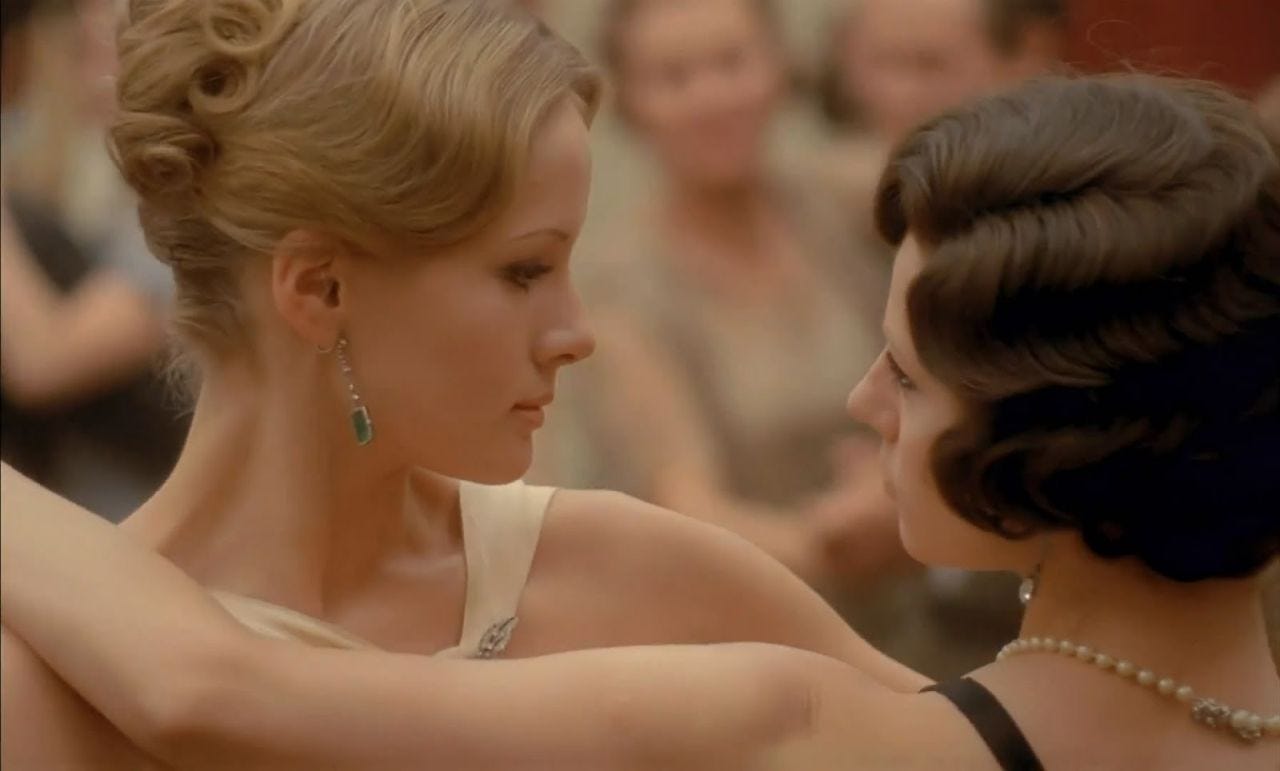
After dinner, Lina takes them all to a cabaret run by “strange” women in men’s suits. As Marcello watches his wife dance, somewhat squeamishly, with the amorous Lina, a woman he would have happily left her for, he reflects again on the impossibility of love. “This, he couldn’t help thinking, was the love that in a different world, with a different life, would have been destined for him, the love that would have saved him, the love he would have enjoyed.”
Quadri and Lina leave town the next morning. Though the couples have made plans to vacation together, Marcello tells Giulia that she will never see their new friends again, and he’s right.
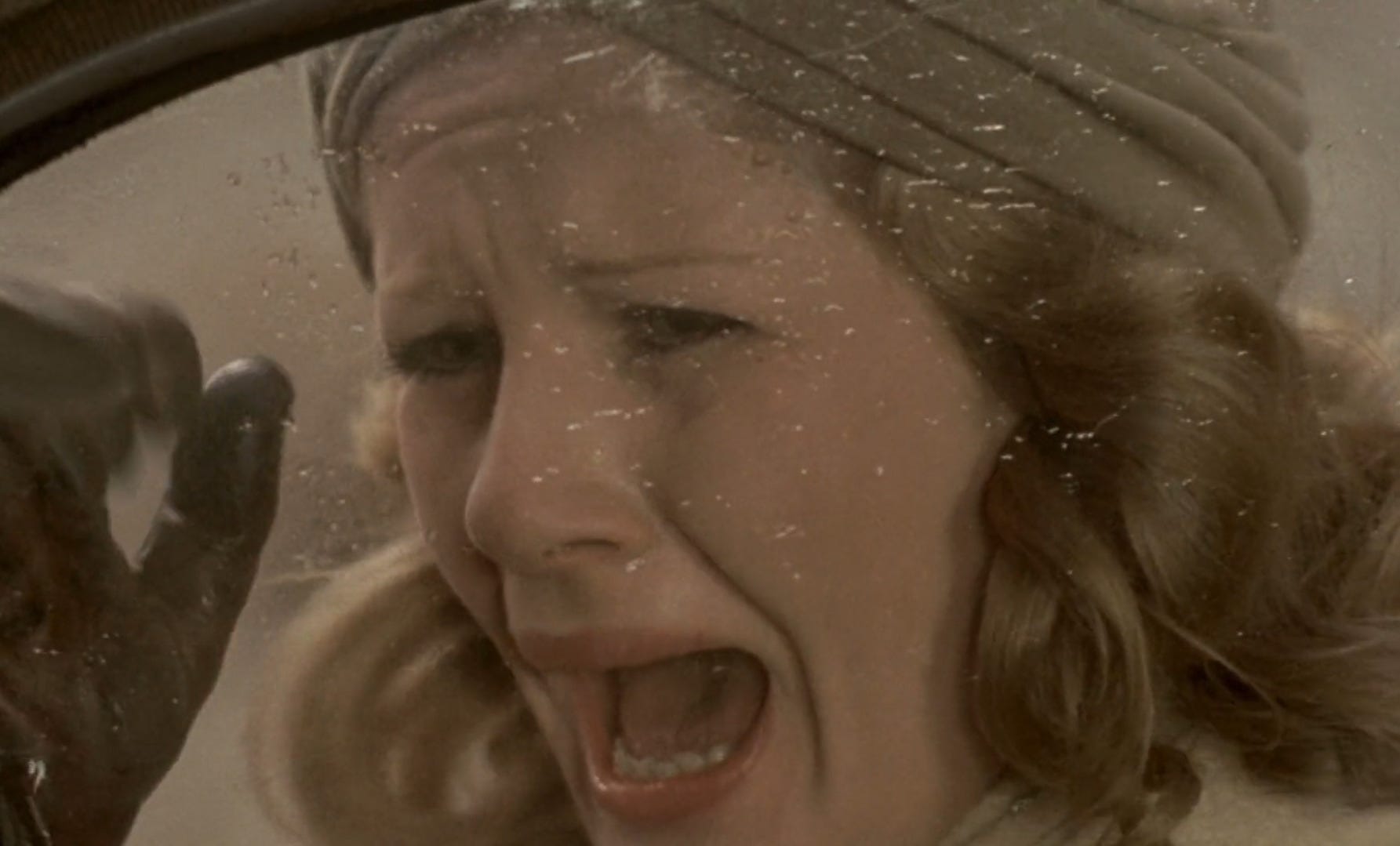
The Conformist’s epilogue opens in 1943, with the fall of Mussolini. The Clericis listen to the radio broadcast from the comfort of their beautiful bourgeois home. Marcello knew from the beginning that there was no winning the war, just as he knows that his family won’t survive this transition. “[His] was a family like all others, with the same affections and the same intimacy, completely normal, with that normality he had sought so tenaciously for years and which now revealed itself to be purely exterior and entirely composed of abnormalities.”
Though Giulia is afraid they’ll be found out as fascists, Marcello convinces her to join him in witnessing the historic moment. When Giulia wanders off for a moment, Marcello encounters a ghost from his past: Lino—which means that the crime that shaped his life never happened. For the first time in over twenty years, they speak, but Marcello can’t tolerate Lino’s casual friendliness.
“You’re talking to me as if nothing happened!” he cries. “Do you realize you destroyed my life?”
Lino, nonplussed, describes Marcello’s normality in perfect detail. “Why are you saying that to me, Marcello? You’re married, you probably have children, you look like you’re well-off, what are you complaining about?”
“When I met you, I was innocent! And afterward I wasn’t, not ever again.”
“But Marcello, we were all innocent. Don’t you think I was innocent, too? And we all lose our innocence, one way or another. That’s normality.”
The next day, while fleeing the city, Marcello, Giulia, and their young daughter are killed in an air raid.
“The secret fear of the morally depraved is that virtue is actually common, and that they’re the ones who are alone.
This quote is from journalist Adam Serwer’s recent Atlantic piece about the evils and excesses of ICE3. I wouldn’t have come across it if writer Peter Raleigh hadn’t noted that this “secret fear” is the same one that animates Marcello from his early days as a lizard killer to his final moments in a fighter pilot’s crosshairs. He is constantly reassuring himself that his cooperation is destiny; his cruelty preordained; his loneliness an incontrovertible fact of life. On the train to their Parisian honeymoon, when he and Giulia glimpse something burning in a field, Marcello identifies with its heat, blazing not like a hearth but a bomb: “I’m like that fire, down there in the night…I’ll flare up and then I’ll go out, without reason, without sequel…a bit of destruction suspended in the dark.”
Fascism is not inevitable, though our titular conformist tells himself this lie for his entire adult life, impressing his human capacity for conviction into the service of authoritarians and imperialists. “Normal men weren’t good,” he reflects, “because normality must always be paid for at a high price, whether consciously or not, by various but always negative complicities, by insensitivity, stupidity, cowardice, even criminality.” He never stops to ask himself why such strenuous, counterintuitive maintenance is necessary if normality is indeed the natural order4?
With Marcello’s story (an anti-bildungsroman, as Ben Shread-Hewitt writes), Moravia shows us how Italian fascism’s preceding paradigms and power structures—institutions like the Catholic Church, the Italian monarchy, the Sicilian Mafia, the nuclear family—were just as insistent on their “naturalness” as the new world order. Marcello’s belief in destiny is cope as as old as the West. Put another way: “[H]e knew if not consciously, then at least by instinct, that he was cursed.”
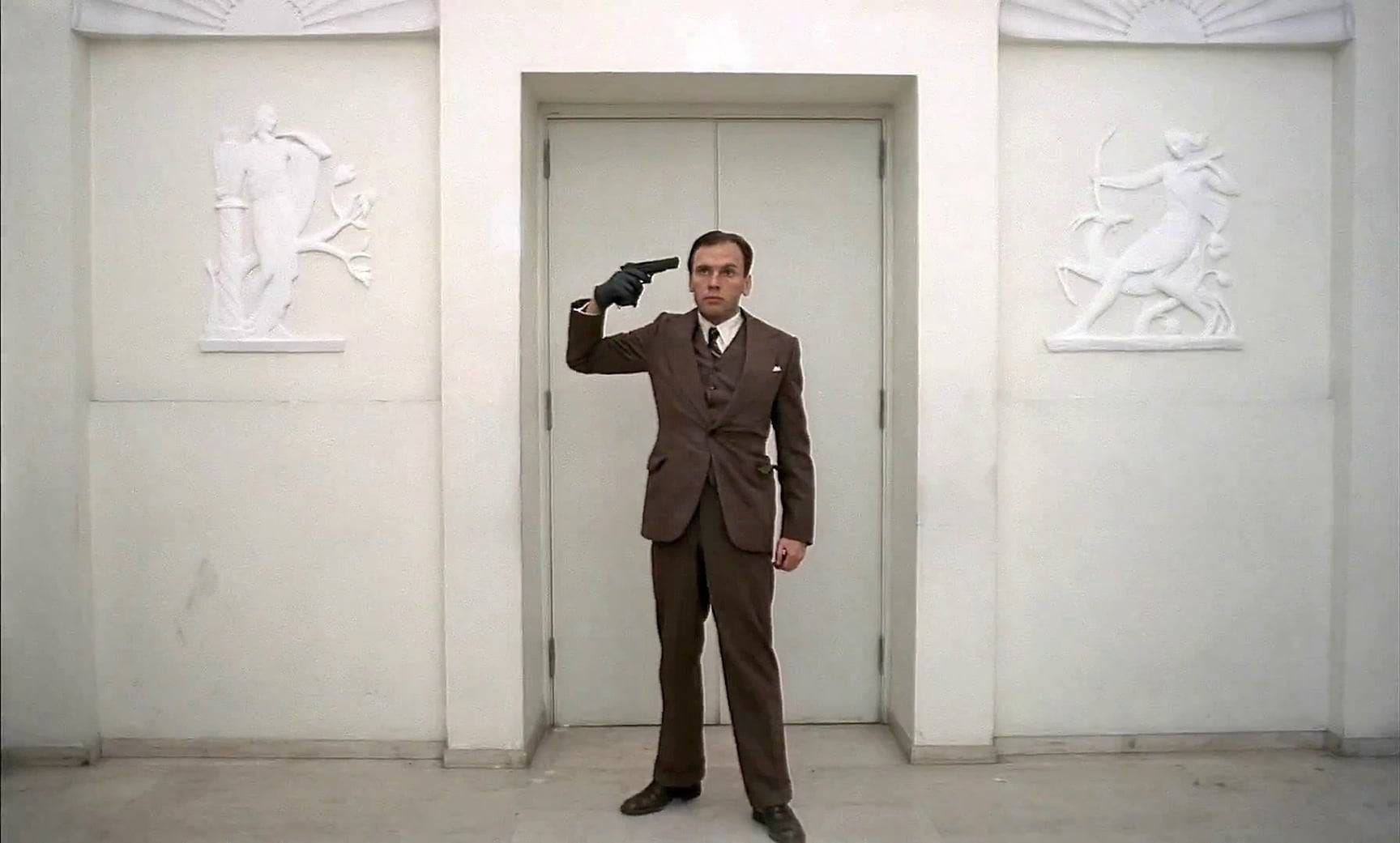
This is not a review of The Conformist, though I thought it would be when I sat down to write it.
I read the novel because I loved Bernardo Bertolucci’s 1970 adaptation when I saw it at Film Forum a few years ago. Watching it again last week only made me more impressed by Moravia and more disgusted with Bertolucci, who I already found loathsome. While the director admittedly brings to life the beauty of The Conformist’s chiaroscuric prose5, the final product is not just unworthy of Moravia’s masterwork, but a perversion of it. (Pauline Kael called it, one hopes shadily, “a triumph of style.”). This perversity is primarily expressed through Bertolucci’s hackneyed transmisogyny. I wish I could say that this surprised me; maybe I’ll write about it another time.
In any case, my so-called review quickly revealed itself to be more akin to a study. I couldn’t help it. The text is too relevant, too alive—I don’t want to critique it, but to share it with you, to encourage you to read it yourself. There is much to commend The Conformist as a story: the monochromatic power of its imagery, the relentlessness of its plot (much of which I haven’t included in this gloss), the author’s ice-cold empathy for a character whose entire life is a renunciation of his own humanity. But it is also important, I think, as a document of the fascist psyche; of the ways in which this particular political machine generated misogynist, Orientalist6, and classist social panics that scapegoated the “decadence” of femininity and queerness in order to undermine Italy’s socialist movements.
“Normality,” Marcello thinks, “[must] lay somewhere else by now; or perhaps it was as yet to come and must be constructed with enormous effort, with doubt, with blood.” Why should we read a novel about fascism’s past when, as Serwer reminds us, we’re living in a fascist present? Because, for all that he calls it destiny, the fascist knows as well as we do that the future is never spoken for.
My readers and subscribers allow me to keep publishing work that’s mostly free for everyone, so thank you kindly for supporting DAVID. If you would like to support me in other ways, you can also like and share my posts, order my third novel, Casanova 20: Or, Hot World, or follow me on Twitter, Instagram, and Bluesky.
Also translated as “ordinary unhappiness,” which is the title of one of my favorite podcasts.
Despite her overall disrepair, his mother is super cunty #NormaDesmond
Sorry to bring that rag into this.
A question we can ask of many “natural” orders, from white supremacy to heterosexuality.
Credit where credit is due to legendaric cinematographer Vittorio Storaro.
The feminine as sinisterly “Oriental” (and vice versa) is one of The Conformist’s motifs.
A great write-up of a phenomenal novel. I'd be very interested in hearing more of your thoughts about the film's failures.
This is a really terrific precis and starting with Freud makes sense. I loved the Bertolucci film in college and have seen it subsequently and was still swept away by thr imagery as the film unfolds. PK was right. It is an exercise in style and what an exercise. You however, have gone back to the text, which adds so much to my understanding of the film, which never got past the surface. For that, I thank you.